Wide Worlds Snapshots

We help you to see the Whole World in Snapshots, And you follow us in your likes and comments/.

Wide Worlds Snapshots

We help you to see the Whole World in Snapshots, And you follow us in your likes and comments/.

Wide Worlds Snapshots

We help you to see the Whole World in Snapshots, And you follow us in your likes and comments/.

Wide Worlds Snapshots

We help you to see the Whole World in Snapshots, And you follow us in your likes and comments/.

Wide Worlds Snapshots

We help you to see the Whole World in Snapshots, And you follow us in your likes and comments/.

Friday, 2 January 2015

Costa Rica - The Wide Worlds Snaps

Republic of Costa Rica
President: Luis Guillermo Solís (2014)
Land area: 19,560 sq mi (50,660 sq km);
total area: 19,730 sq mi (51,100 sq km)
Population (2012 est.): 4,636,348 (growth rate: 1.29%); birth rate: 16.4/1000;

infant mortality rate: 9.2/1000;
life expectancy: 77.89; density per sq km: 82
Capital and largest city (2009 est.): San José, 1,416,
Monetary unit: Colón


Costa Rica was inhabited by an estimated 400,000 Indians when Columbus explored it in 1502. The Spanish conquest began in 1524. The region grew slowly and was administered as a Spanish province. Costa Rica achieved independence in 1821 but was absorbed for two years by Agustín de Iturbide in his Mexican empire. It became a republic in 1848. Except for the military dictatorship of Tomás Guardia from 1870 to 1882, Costa Rica has enjoyed one of the most democratic governments in Latin America.


In the 1970s, rising oil prices, falling international commodity prices, and inflation hurt the economy. Efforts have since been made to reduce reliance on coffee, banana, and beef exports. Tourism is now a major business. Óscar Arias Sánchez worked to simultaneously heal his country's economic woes and foster peace in Central America.


José Maria Figueres Olsen of the National Liberation Party became president in 1994. He opposed economic suggestions made by the International Monetary Fund, instead favoring greater government intervention in the economy. The World Bank subsequently withheld $100 million of financing. In 1998, Miguel Angel Rodríguez of the Social Christian Unity Party became president, pledging economic reforms, such as privatization.


In 2000, Costa Rica and Nicaragua resolved a long-standing dispute over navigation of the San Juan River, which forms their shared border. A psychiatrist, Abel Pacheco, also of the Social Christian Unity Party, won the presidency in elections held in April 2002. In May 2003, several national strikes took place, by energy and telecommunications workers over privatization and by teachers over their salaries.


Tags: Costa Rica - The Wide Worlds Snaps,The Wide Worlds Snaps,Costa Rica,Costa Rica beautifull cities pictures,Costa Rica beautifull country pictures,Costa Rica beautifull cities snaps,Costa Rica whole country pictures,Costa Rica whole country snaps,Costa Rica pictures,Costa Rica country,

Panama - The Wide Worlds Snaps

Republic of Panama
President: Juan Carlos Varela (2014)
Land area: 29,340 sq mi (75,991 sq km);
total area: 30,193 sq mi (78,200 sq km)
Population (2014 est.): 3,608,431 (growth rate: 1.35%); birth rate: 18.61/1000; infant mortality rate: 10.7/1000;

life expectancy: 78.3; density per sq mi: 140.6
Capital and largest city (2011 est.): Panama City, 1.426 million
Other large cities: San Miguelito, 321,501; Tocumen, 88,543
Monetary units: balboa; U.S. dollar


Explored by Columbus in 1502 and by Balboa in 1513, Panama was the principal shipping point to and from South and Central America in colonial days. In 1821, when Central America revolted against Spain, Panama joined Colombia, which had already declared its independence. For the next 82 years, Panama attempted unsuccessfully to break away from Colombia. Between 1850 and 1900 Panama had 40 administrations, 50 riots, 5 attempted secessions, and 13 U.S. interventions. After a U.S. proposal for canal rights over the narrow isthmus was rejected by Colombia, Panama proclaimed its independence with U.S. backing in 1903.


For canal rights in perpetuity, the U.S. paid Panama $10 million and agreed to pay $250,000 each year, which was increased to $430,000 in 1933 and to $1,930,000 in 1955. In exchange, the U.S. got the Canal Zone—a 10-mile-wide strip across the isthmus—and considerable influence in Panama's affairs. On Sept. 7, 1977, Gen. Omar Torrijos Herrera and President Jimmy Carter signed treaties giving Panama gradual control of the canal, phasing out U.S. military bases, and guaranteeing the canal's neutrality.


Nicolas Ardito Barletta, Panama's first directly elected president in 16 years, was inaugurated on Oct. 11, 1984, for a five-year term. He was a puppet of strongman Gen. Manuel Noriega, a former CIA operative and head of the secret police. Noriega replaced Barletta with vice president Eric Arturo Delvalle a year later. In 1988, Noriega was indicted in the U.S. for drug trafficking, but when Delvalle attempted to fire him, Noriega forced the national assembly to replace Delvalle with Manuel Solis Palma. In Dec. 1989, the assembly named Noriega “maximum leader” and declared the U.S. and Panama to be in a state of war. In Dec. 1989, 24,000 U.S. troops seized control of Panama City in an attempt to capture Noriega after a U.S. soldier was killed in Panama. On Jan. 3, 1990, Noriega surrendered himself to U.S. custody and was transported to Miami, where he was later convicted of drug trafficking. Guillermo Endara, who probably would have won an election suppressed earlier by Noriega, was installed as president.


On Dec. 31, 1999, the U.S. formally handed over control of the Panama Canal to Panama. Meanwhile, Colombian rebels and paramilitary forces have made periodic incursions into Panamanian territory, raising security concerns. Panama has also faced increased drug and arms smuggling.
In May 2004 presidential elections, Martín Torrijos Herrera, the son of former dictator Omar Torrijos, won 47.5% of the vote. He took office in September.
Panamanians approved a plan to expand the Panama Canal in 2006. It will likely double the canal's capacity and is expected to be completed by 2015.


Defying the current Latin American trend for left-leaning governments, Panama elected millionaire businessman Ricardo Martinelli as its president on May 3, 2009. After a period of rapid economic growth, Panama had succumbed to the global recession. Trading on his personal record of success—and utilizing his fortune to get his message out—Martinelli promised to encourage foreign investment and help the poor.


After serving as vice president under Martinelli, Juan Carlos Varela was elected president in May 2014. In the election, Varela defeated José Domingo Arias, the candidate from Martinelli's party, Cambio Democrático. A member of the Panameñista Party, the oldest party in Panama, Varela took office on July 1, 2014.


Tags: Panama - The Wide Worlds Snaps,The Wide Worlds Snaps,Panama,Panama beautifull cities pictures,Panama beautifull snaps,Panama beautifull country snaps,Panama snaps,Panama country,Panama cities,Panama whole country pics,Panama whole country beautifull country pictures,

Saturday, 27 December 2014

Guatemala - The Wide Worlds Snaps

President: Otto Pérez Molina (2012)Land area: 41,865 sq mi (108,430 sq km);total area: 42,042 sq mi (108,890 sq km)Population (2013 est.): 14,373,472 (growth rate: 1.91%); birth rate: 25.99/1000; infant mortality rate: 24.32/1000; life expectancy: 71.46Capital and largest city (2009 est.): Guatemala City, 1.075 millionMonetary unit: QuetzalNational name: República de GuatemalaCurrent government officialsLanguages: Spanish 60%, Amerindian languages 40% (23 officially recognized Amerindian languages, including Quiche, Cakchiquel, Kekchi, Mam, Garifuna, and Xinca)Ethnicity/race: Mestizo (Ladino)—mixed Amerindian-Spanish ancestry—and European 59.4%, K'iche 9.1%, Kaqchikel 8.4%, Mam 7.9%, Q'eqchi 6.3%, other Mayan 8.6%, indigenous non-Mayan 0.2%, other 0.1% (2001)Religions: Roman Catholic, Protestant, indigenous Mayan beliefsNational Holiday: Independence Day, September 15Literacy rate: 71% (2003 est.)Economic summary: GDP/PPP (2012 est.): $79.97 billion; per capita $5,300.Real growth rate: 3%.Inflation: 3.8%.Unemployment: 4.1% (2011 est.).Arable land: 13.22%.Agriculture: sugarcane, corn, bananas, coffee, beans, cardamom; cattle, sheep, pigs, chickens.Labor force: 5.571 million; agriculture 38%, industry 14%, services 48% (2011 est.).Industries: sugar, textiles and clothing, furniture, chemicals, petroleum, metals, rubber, tourism.Natural resources: petroleum, nickel, rare woods, fish, chicle, hydropower.Exports: $10.09 billion (2012 est.): coffee, sugar, petroleum, apparel, bananas, fruits and vegetables, cardamom.

Imports: $15.84 billion (2012 est.): fuels, machinery and transport equipment, construction materials, grain, fertilizers, electricity.Major trading partners: U.S., El Salvador, Honduras, Mexico, South Korea, China.Communications: Telephones: main lines in use: 1.626 million (2011); mobile cellular: 20.716 million (2011).Broadcast media: 4 privately-owned national terrestrial TV channels dominate TV broadcasting; multi-channel satellite and cable services are available; 1 government-owned radio station and hundreds of privately-owned radio stations (2007).Internet hosts:357,552 (2012).Internet users: 2.279 million (2009).Transportation: Railways: total: 332 km (2008).Highways: total: 14,095 km; paved: 4,863 km (including 75 km of expressways); unpaved: 9,247 km (2000).Waterways: 990 km; note: 260 km navigable year round; additional 730 km navigable during high-water season (2012).Ports and harbors: Puerto Quetzal, Santo Tomas de Castilla.Airports: 291 (2012).

International disputes: annual ministerial meetings under the Organization of American States-initiated Agreement on the Framework for Negotiations and Confidence Building Measures continue to address Guatemalan land and maritime claims in Belize and the Caribbean Sea; Guatemala persists in its territorial claim to half of Belize, but agrees to Line of Adjacency to keep Guatemalan squatters out of Belize's forested interior; Mexico must deal with thousands of impoverished Guatemalans and other Central Americans who cross the porous border looking for work in Mexico and the United States.

Once the site of the impressive ancient Mayan civilization, Guatemala was conquered by Spanish conquistador Pedro de Alvarado in 1524 and became a republic in 1839 after the United Provinces of Central America collapsed. From 1898 to 1920, dictator Manuel Estrada Cabrera ran the country, and from 1931 to 1944, Gen. Jorge Ubico Castaneda served as strongman.


Tags: Guatemala - The Wide Worlds Snaps,The Wide Worlds Snaps,Guatemala,Guatemala beutifull picture,Guatemala beautifull country,Guatemala snps,Guatemala pictures,Guatemala whole country pictures,Guatemala whole country snaps,Guatemala beautifull country pictures,

Wednesday, 24 December 2014

Dominican Republic - The Wide Worlds Snaps

President: Danilo Medina (August 2012)Land area: 18,680 sq mi (48,381 sq km);total area: 18,815 sq mi (48,730 sq km)Population (2012 est.): 10,088,598 (growth rate: 1.31%); birth rate: 19.44/1000; infant mortality rate: 21.3/1000; life expectancy: 77.44; density per sq km: 196Capital and largest city (2009 est.): Santo Domingo, 2,138,000Other large city: Santiago de los Caballeros, 501,800Monetary unit: Dominican Peso

The Dominican Republic was explored by Columbus on his first voyage in 1492. He named it La Española, and his son, Diego, was its first viceroy. The capital, Santo Domingo, founded in 1496, is the oldest European settlement in the Western Hemisphere.

Spain ceded the colony to France in 1795, and Haitian blacks under Toussaint L'Ouverture conquered it in 1801. In 1808, the people revolted and captured Santo Domingo the next year, setting up the first republic. Spain regained title to the colony in 1814. In 1821 Spanish rule was overthrown, but in 1822 the colony was reconquered by the Haitians. In 1844, the Haitians were thrown out and the Dominican Republic was established, headed by Pedro Santana. Uprisings and Haitian attacks led Santana to make the country a province of Spain from 1861 to 1865.

President Buenaventura Báez, faced with an economy in shambles, attempted to have the country annexed to the U.S. in 1870, but the U.S. Senate refused to ratify a treaty of annexation. Disorder continued until the dictatorship of Ulíses Heureaux; in 1916, when chaos broke out again, the U.S. sent in a contingent of marines, who remained until 1924.

A sergeant in the Dominican army trained by the marines, Rafaél Leonides Trujillo Molina, overthrew Horacio Vásquez in 1930 and established a dictatorship that lasted until his assassination in 1961, 31 years later. In 1962, Juan Bosch of the leftist Dominican Revolutionary Party, became the first democratically elected president in four decades.


Tags: Dominican Republic - The Wide Worlds Snaps,The Wide Worlds Snaps,Dominican Republic,Dominican Republic beutifull country oictures,Dominican Republic beautifull pictures,Dominican Republic pictures,Dominican Republic beautifull snaps,Dominican Republic snaps,Dominican Republic cities,Dominican Republic whole country,
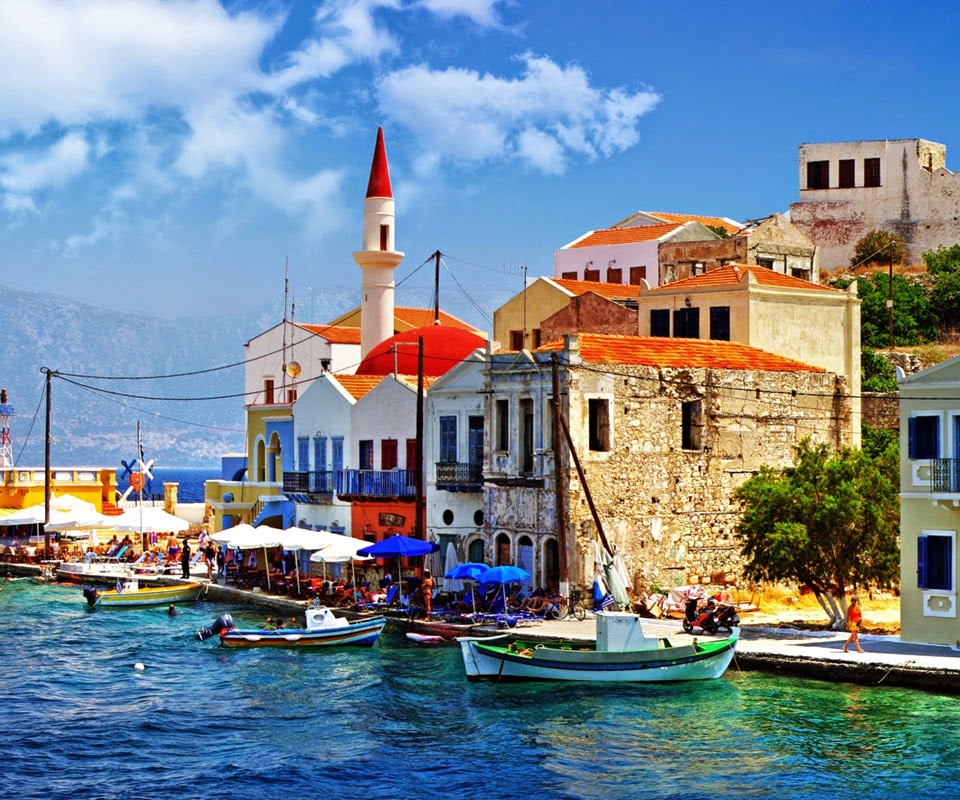
Cuba - The Wide Worlds Snaps

President: Raúl Castro (2008)
Total area: 42,803 sq mi (110,860 sq km)
Population (2012 est.): 11,075,244 (growth rate: -0.12%); birth rate: 9.96/1000; infant mortality rate: 4.83/1000; 

life expectancy: 77.87;
density per sq km: 103
Capital and largest city (2009 est.): Havana, 2,140,000
Other large cities: Santiago de Cuba, 554,400; Camagüey, 354,400; Holguin, 319,300; Guantánamo, 274,300;Santa Clara, 251,800
Monetary unit: Cuban Peso

Arawak (or Taino) Indians inhabiting Cuba when Columbus landed on the island in 1492 died from diseases brought by sailors and settlers. By 1511, Spaniards under Diego Velásquez had established settlements. Havana's superb harbor made it a common transit point to and from Spain.


In the early 1800s, Cuba's sugarcane industry boomed, requiring massive numbers of black slaves. A simmering independence movement turned into open warfare from 1867 to 1878. Slavery was abolished in 1886. In 1895, the poet José Marti led the struggle that finally ended Spanish rule, thanks largely to U.S. intervention in 1898 after the sinking of the battleship Maine in Havana harbor.
An 1899 treaty made Cuba an independent republic under U.S. protection. The U.S. occupation, which ended in 1902, suppressed yellow fever and brought large American investments. The 1901 Platt Amendment allowed the U.S. to intervene in Cuba's affairs, which it did four times from 1906 to 1920. Cuba terminated the amendment in 1934.


In 1933, a group of army officers, including army sergeant Fulgencio Batista, overthrew President Gerardo Machado. Batista became president in 1940, running a corrupt police state.
In 1956, Fidel Castro Ruz launched a revolution from his camp in the Sierra Maestra mountains. Castro's brother Raul and Ernesto (Ché) Guevara, an Argentine physician, were his top lieutenants. Many anti-Batista landowners supported the rebels. The U.S. ended military aid to Cuba in 1958, and on New Year's Day 1959, Batista fled into exile and Castro took over the government.


Tags: Cuba - The Wide Worlds Snaps,The Wide Worlds Snaps,Cuba,Cuba beautifull country,Cuba snaps,Cuba whole country cities,Cuba beautifull snaps,Cuba cities,Cuba pictures,